found drama

get oblique

Linkdump for September 23rd

by Rob Friesel
  • CoffeeScriptThe most interesting bit in here was Joel Turnbull quoting Tom Dale:

    I’m not so confident now. What has shifted? Tom Dale states in the thread “Every CoffeeScript developer knows JavaScript. The inverse is not true.” This rings true for me, and it’s not so much that something has shifted. It’s just that this continues to be the case, and I don’t foresee a future where it is not. Posting CoffeeScript in technical articles strikes me as presumptuous now.

    I've never personally been a huge fan of CoffeeScript, but I've always tried to reserve my judgment because I hadn't spent any significant time with it. I recently read Alex MacCaw's The Little Book on CoffeeScript and while I wouldn't say that I emerged a fan, he also improved my overall opinion of that little language.

    That being said, to me the most interesting thing about CoffeeScript was never the language itself but the way it helped some people to think differently about JavaScript itself. I believe there are some arguments to be made here that some of the evolutions and innovations making their way into ES6 are because of (meta-) languages like CoffeeScript.

  • Angelina Fabbro:

    I know I come across as vibrant, and social, and ‘good at interactions’ but actually I’ve had to practice long and hard at reading people’s behavior to figure out how to do this. A lot of the time I am sure I still get it wrong, and if I ever have with you, I am very sorry. Please tell me what I misinterpreted and I promise you it will be received in a safe and gentle way. I am actually an introvert, I find conferences exausting – which I’m sure most people would not guess because this year I have done a lot of them.

    (tagged: public speaking )
  • The more I see fat arrows, the more I like them. I only wish that they'd gone all out on the terseness and implicitly returned the last statement in the braced version. Oh well, still great.
  • A cool little tool by Jackie Balzer for demoing the color function APIs for Sass and Compass.
    (tagged: Sass CSS Compass )
  • Joel Hooks:

    Aside from basic nerd compulsion to explore cool technology, it became rapidly apparent that this was the right tool for the job.

    A good reminder that, for as much as you may love a particular technology or framework, use the rights ones in the right places for the right things. (A variation on "don't put all your eggs in one basket"?)


Vermont Code Camp 5 round-up

by Rob Friesel

Vermont Code Camp 5 (#vtcc5) was a blast this year. As much or more fun than last year. I’m impressed how little ol’ Vermont can attract such a big crowd for an all-day-Saturday tech event (and on such a nice day, too) — including speakers from up and down the east coast. I had a tough time choosing which talks to go to, but each one I attended was excellent.

Vermont Code Camp Continue reading →

dream.20130918: they walked out

by Rob Friesel

They asked you to put a thing together. Nothing super long, but detailed enough to convey a few key points. (You talked about and agreed upon those key points.) A quick presentation — 10 minutes or so. They asked you to, and you came through. Did the time, did the extra work to get the thing together. It took a few hours. And all at the last minute, too. And you get there and you’re waiting your turn, right there in the audience like everyone else. And someone before you (maybe 2-3 speakers ahead in the line-up?) says a few provocative things; they’re not necessarily things that are wrong but they’re misleading and easily misconstrued, and contradict a couple of the points you have to make. And so you’re scrambling to tweak those couple points in your presentation (or at least your speaker notes, the talking points). Then they let the provocateur go long. Then the next couple speakers go long. And when you get up there to start in on your quick presentation, everyone starts filing out. Dismissive shrugs and waves and sarcastic golf-claps. Only a handful of people linger but what’s the point in finishing? Drop the mic. Storm out. Find him — the one that asked you to speak in the first place — what was that all about? and I’m upset about this and I have something to say and I need you to listen…

quick thoughts on the GDI TA experience

by Rob Friesel

Girl Develop ItWhile the thoughts are still fresh in my mind, I wanted to quickly jot down a few things about what it was like to be a TA for the Burlington chapter of Girl Develop It (GDI).

Most of what I’m feeling at the end of the day can (in a nutshell) be boiled down to: Wow, that was incredibly rewarding and everyone that codes for a living should do that at least once. And by “that” I mean get in there and help a room full of people really dig into code for the first time. It’s truly amazing what you find out about yourself and about them. Continue reading →

Linkdump for September 3rd

by Rob Friesel
  • Philip Walton:

    Almost every type of coupling between HTML, CSS, and JavaScript can be lessened with an appropriate use of classes and a predictable class naming convention.

    Long read, but he has lots of good points. And as he points out, a lot of these are easy (and tempting) mistakes to make.

  • Tom Dale:

    What we’re doing wasn’t even possible in the browser a few years ago. It’s time to revisit our received wisdom.

    Possibly a bit deliberately inflammatory? Contrast this with something like the Jake Archibald post that made the rounds about two months ago. Both sides of this argument have merit, and both of them have nuanced discussions of the subject. Meditate it on come to your own conclusions.

    For what it's worth: "Progressive enhancement everywhere except where it doesn't make sense."

    UPDATE: And then along comes the Brad Frost “Fuck You” post which I can’t help but read as a direct response to Tom Dale’s post. And I get it — both sides of this discussion — which are different flavors of the same side, really — and how everyone’s passions are getting in the way of listening to each other.

  • Tim Kadlec:

    The point is not that we all need to be testing on Google Glass—time will tell how well that device does. The point is that here is a brand new device and form factor and they didn’t have to do a single thing to have get their site working on it.

    He's speaking more broadly than just "do responsive design"; he's talking about progressive enhancement and some other foundational principles that should guide you as a front-end engineer. It's not always easy to work this way, but you should fight for it; remember: the rewards are rich.

    (tagged: design )
  • If you write JavaScript: you want this.
  • Ryan Singer (37signals):

    It’s important to understand that a feature is not a situation. You can dig into a situation to learn what is valuable and what is not according to the goal. Digging into a feature definition doesn’t do that. It has no origin and no goal. Analyzing a feature definition leads you to play out all the things a person might value from the feature instead of learning what they actually value.

  • Oh hey! Check out this fascinating blog my friend found: "…dedicated to Vermont's curiosities, esoterica and forgotten places."
    (tagged: Vermont )
  • Joel Hooks has been tearing it up lately and this deep-dive into AngularJS services is no exception.

dream.20130902: subways, Scotch

by Rob Friesel

She pulls in to the parking lot, which is nestled between the three buildings. She is someone’s older sister, but not yours; she is a friend. All four of you are going to the same show. It isn’t until after she pulls the e-brake that you notice the barriers up around the one building. You intended to enter there, to go down into the subway and ride to the club from there. (You’re only here for its convenient and free parking; never mind that it’s a sketchy neighborhood.) You don’t know this city well at all and suggest turning around, looking for somewhere else to park, for somewhere else to get on the subway. But your two friends do know the city well, and laugh off your suggestion. The subway (they explain) is on a pretty predictable grid and it is easier to park here and walk up or down a block or two to catch the train at the next stop. So you follow them up to and around the barrier; through the alley and out onto the street on the other side. (Your female companion disappears, vanishes into the city air.) You follow them for two blocks before they duck into a swanky-looking hotel. “There’s a subway station in the basement,” they explain. “They can’t keep us out.” And then they stop in the hotel bar. And promptly order a glass of Scotch each. You linger a moment longer, delaying your order, reviewing the selection. Your friends had quickly gone for an easy-to-recognize name. But tucked back behind a couple of other bottles is something precious and rare. And the bartender notices you noticing it and provides you with a generous pour after you speak its name correctly. (Though he jokes that you must like drinking diesel.) When you join your friends at the table, they admire your drink (you hadn’t even known they liked Scotch, to say nothing of being connoisseurs) and seem jealous and quickly switch the topic to how soon the train will arrive.

search term haiku: July 2013

by Rob Friesel

airline foot fetish
solving problems the Square way
WebStorm file watchers

“Search Term Haiku” is a series wherein I examine this site’s log files and construct one or more haiku poems from search terms and phrases that led visitors to the site. Where possible, I attempt to keep the search phrases intact. However, as these are haiku poems, I do need to follow the rules.

dream.20130901: secret ways

by Rob Friesel

Into the hospital through the Emergency Room. Down the hall, bear right. Bear right again. Took a wrong turn; back up, retrace your steps, go left at the shelf full of antiseptic swabs. Behind the lightbox for the X-rays is a door. Pass through the door and you find a crowded room. A party. Navigate through the party. Pass the punchbowl and go down another set of stairs. You enter a crowded bar. Go through the bar, all the way to the back, past the billiards and the tables and the booths. There are two doors in the back. Go into the kitchen. Go to the back of the kitchen. Exit the kitchen into an alley (though the alley itself does not open to any street). At the other end of the alley is a door, two steps down from the pavement. Through the door is a speakeasy. Work your way through the crowded speakeasy to the back. Open the trapdoor and lower yourself into the wine cellar. At the back of the wine cellar, move aside the cask that reads 1914. Pass through that portal. He’s in there, waiting for you. He has a secret to tell.

dream.20130826: ghost ceiling

by Rob Friesel

It’s a large house in… New York City? It’s mansion-sized. Whatever the city is, it’s a large city. You don’t live here, you’re just visiting. But you also haven’t come to this house as a tourist. You’re not sure why you’re here, but you know as you assume your position in the line that you need to be here. The tour guide arrives not long after that and starts explaining the history of the house. Along the Gothic wrought iron fence are bronze plaques — at least a dozen of them. Each plaque has an embossed portrait and a brief description. You don’t have time to read each one, as the tour guide starts the line moving. She explains that each plaque is there to commemorate a victim of the house. The first two victims were the first two murders, and the third was the suicide of the original murderer. The rest are all unexplained.

You enter the house and she ushers all of you onto an enclosed platform. Once everyone is aboard, she shuts the door and the platform begins to move. (What kind of Disney-fied Haunted Mansion crap is this? you wonder.) She goes on with her explanation. Somehow the platform maneuvers through the house’s many tiny rooms. You don’t notice it, but at some point you approach a staircase and it’s as though the entire geometry of the house changes. Suddenly everything is much larger. You enter a humongous foyer. Above you, the tour guide explains, all over the ceiling is a long-ago ruined mosaic or fresco (no one is sure) that was an eighteenth-century equivalent to an autostereogram. You stare at the ceiling as the platform descends. And you start to make out dots and lines. They’re not quite images, but they’re definitely patterns. And you start to feel yourself drawn upward, even as the platform descends.

Posted in Dream [#] Comments Off on dream.20130826: ghost ceiling

Linkdump for August 23rd

by Rob Friesel
  • Warren Ellis sketch (credit to The Paris Review)Molly Crabapple interviewed Warren Ellis for The Paris Review. The title is a quote from the interview, but this one was much better:

    There is no such thing, I believe, as a killer who sees themselves as the villain of their own story.

    (tagged: Warren Ellis )
  • I enjoyed this thoughtful little piece by Ben Brooks. A couple of notes here:

    1. it took me a long time to figure out what the first image was supposed to be showing; and
    2. he's right about comment sections.
    (tagged: scrolling )
  • From the bertramdev/asset-pipeline README:

    The Grails asset-pipeline is a plugin used for managing/processing static assets. These include processing, and minification of both css, and javascript files. It is also capable of being extended to compile custom static assets, such as coffeescript. Asset Pipeline is intended to replace the defacto Grails equivalent (resources-plugin) with a more efficient, developer friendly architecture (similar to rails asset-pipeline). The asset-pipeline levereges the latest in minification (UglifyJS) to reduce your asset sizes as much as possible.

    I haven’t really dug into this beyond the README yet, but it might be worth at least some level-set examination.

    (tagged: Grails )
  • Ted Dziuba:

    I’m not working to make the most efficiently coded, concise solution, I’m working to deliver business value in context.

  • Laura Miller, Salon.com:

    Walker regards conspiracy theory as a form of “folklore,” because “it says something true about the anxieties and experiences of the people who believe and repeat it, even if it says nothing true about the objects of the theory itself.”

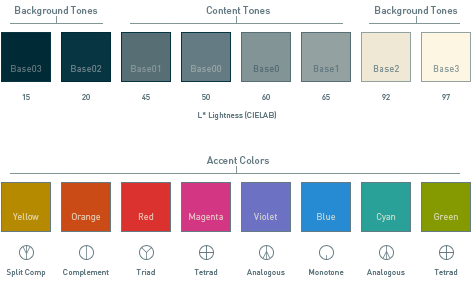
  • the Solarized palette
    "Precision colors for machines and people" by Ethan Schoonover. I'm not sure why it's taken me so long to find this but… Well, I'm glad I did. Great color palettes for your terminal and IDE.
    (tagged: Solarized color )