Happy 5th Birthday
¶ by Rob Friesel
Happy fifth birthday to you, Holden. I can’t imagine the world without you, nor would I want to.
Happy fifth birthday to you, Holden. I can’t imagine the world without you, nor would I want to.
Secrecy erodes the rule of law because it makes democratic accountability impossible.
And if I sound exasperated with other liberal voices on this issue it’s because their barricades are in the wrong place, facing the wrong way, defending the wrong moral and legal terrain. Thus far, the sum of of liberal argument against the NSA program amounts to a veritable Maginot Line of legal ignorance, borrowed libertarian selfishness and jaw-dropping obliviousness to the notion that those who fear a civil liberties apocalypse and wish to fight against such are decades late to the fields where battles actually rage.
You might be able to get away with David Simon's first, but definitely read Maciej's post and this.
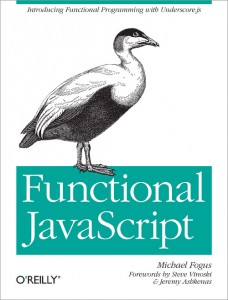 Last night was the third BurlingtonJS meet-up, and it seems to have been another success. Attendance was good and the crowd was once again pretty engaged. Always fun, always a room full of smart people, always good discussion. This month, I had the privilege of presenting, and took a few
 pages from chapters Michael Fogus’s (@fogus) new book, Functional JavaScript. 1 I’ve included the slides for my talk here: Continue reading →

“Time to First Photo” on the Photostream page
The first time you come to any Flickr page, we store the width of your browser window in a cookie. We can then read that cookie on the server on subsequent page loads.
Gotta love a simple solution.
A front-end operations engineer would own external performance. […] They own everything past the functionality. They are the bridge between an application’s intent and an application’s reality.
The price of a word is being bid to zero. That one magazine story I’ve been working on has been in production for a year and a half now, it’s been a huge part of my life, it’s soaked up so many after-hours, I’ve done complete rewrites for editors — I’ve done, and will continue to do, just about anything they say — and all for free. There’s no venture capital out there for this; there are no recruiters pursuing me; in writer-town I’m an absolute nothing, the average response time on the emails I send is, like, three and a half weeks. I could put the whole of my energy and talent into an article, everything I think and am, and still it could be worth zero dollars.
This resonates with me in so many painfully obvious ways.
Testing made easier in Internet Explorer
Such a great resource.
Those seven minutes should be, in a word, unpleasant. The upside is, after seven minutes, you’re done.
I think I'd be OK with an unpleasant 7-minute workout.
WebStorm and Compass
drama of an octopus
Andale Mono fat
“Search Term Haiku” is a series wherein I examine this site’s log files and construct one or more haiku poems from search terms and phrases that led visitors to the site. Where possible, I attempt to keep the search phrases intact. However, as these are haiku poems, I do need to follow the rules.
@includes after "regular" styles. If you're ordering the CSS properties according to some specific scheme (e.g., Zen Ordering) then wouldn't you want the output of your mixins to be in the right place? Other than that: some good rules to follow.where blocks in Jasmine tests. It's a pretty clever technique, and it looks like he arrived at roughly the same place as Neckbeard.js. (Not that I'd heard of Neckbeard.js before either… so that was a bonus.)
What happens if I scroll and I happen to move the mouse at the same time? It's perfectly possible for me to inadvertently "interact" with an element as I scroll past it, triggering an expensive paint. That, in turn, could push me through my frame budget of ~16.7ms (the time we need to stay under that to hit 60 frames per second). I've created a demo to show you exactly what I mean. Hopefully as you scroll and move your mouse you'll see the hover effects kicking in, but let's see what Chrome's DevTools makes of it…
Nobody actually wants to use frameworks. We only want to build web user interfaces efficiently and frameworks help.
I largely agree with his points, especially the thrust of the above pull-quote. When discussing frameworks and libraries like this, it's easy to lose sight of the fact that they're around because of some gaping hole in the language's native/standard libraries. Google's recent efforts (e.g., AngularJS and now Polymer) point to more declarative or component-oriented approaches; put in the context of HTML5 and the advancements there, that makes a lot of sense. I'm interested in Polymer, but I feel like I need some more time to digest it. Like when Twitter open-sourced Flight, there's this sense of: "Cool! That's a novel approach…" Which also feels a bit like: "Whoa, that's really different." Now to dig in…
He [Nathan Jurgenson] pointed out that there's a lot of "reality" in the virtual, and a lot of "virtual" in our reality. When we use a phone or a computer we're still flesh-and-blood humans, occupying time and space. When we're frolicking through a field somewhere, our gadgets stowed far away, the internet still impacts our thinking: "Will I tweet about this when I get back?"
